Sunday, 11 October 2020

Standing Stones of God's Country

Carreg Samson

Of all the stone circle hunting I have done in the U.K., I have come to discover that more often than not they are found in the middle of farmer’s fields. This being the case, they aren’t always the easiest spots to locate. Opposed to what one might think, “Wouldn’t you just see a giant stone in the middle of nowhere?”

This is the case for what is known as Samson’s Stones. Not a stone circle but rather standing stones. These were also used during the neolith period to identify burial sites. PS. There is no parking near the stones unless you want to risk parking at the farm, walk down the field and hope the farmer doesn’t come out to shoot you for being on his private property…

Now where was I…oh yes, legend has it the stones are called "Samson" because Saint Samson of Dol allegedly placed the capstone in position with his little finger. Right. And the aliens created Stonehenge.

The 5000-year-old Neolithic dolmen is located half a mile west of Abercastle near the Pembrokeshire Coast Path in Wales with magnificent views of the coastline in the background. 

Top tip: Sunset is a great time to capture the stones 

Which brings me to my next stop...


Pentre Ifan burial site at sunset (aka. The Race to Get a Picture Before Dark)


This site can be found in another field, (surprise, surprise). The stones share a pasture with a herd of brown cows that stare at tourists with their large, round eyes bewildered as to why visitors make such a fuss over stationary objects. Once the bovines know you’re not there to fed them, they MOOve on.

Ha.Ha. *clears throat.*

 You’ll be happy to know that there is parking at this location. Well, erhm….there is a small lay-by next to a plaque the size of a dinner plate, (good luck finding it by the side of road at dusk!) which declares this spot a historical monument.

After a short walk from the road, you’ll spy Pentre Ifan. One of the most impressive Neolithic burial chamber sites in Wales.  The stones’ height make them quite the impressive megalith monument. The cap stone is over 17 feet long, weighs over 16 tons and is balanced on just three support stones! I wouldn’t want to be near it on the day it capsizes!

Haverfordwest Castle


“When it rains, it pours”, who hasn’t heard that one? So whilst it’s raining best get in the car and drive off in search of more castles, right?

Haverfordwest is approximately an hour by car from Kidwelly if you want to hit them up on the same day.

History
In 1215, the English were raiding the Welsh territories but Llywellen the Great (not sure what makes him so great) left Haverfordwest Castle alone. The castle was thought to be made of stone for when the town of Haverfordwest was sacked and burnt to the ground, the castle remained impenetrable.

In 1405, the French tried to invade but Haverfordwest castle stood its ground and beat them into retreat. *Insert joke about the French surrendering here*

During the 16th century the castle fell into disrepair and during the civil war, Cromwell demanded the castle be blown to bits to finish the job.

Being repaired sometime later, the castle was used as a prison in the 19th century. Mostly filled with rioters and smugglers and the odd French POWs (so they got in after all!), the gaol was of poor conditions. No baths, toilets or infirmary and the inmates slept on straw. In 1820s a treadmill was installed so the prisoners could (exercise? No. Not that kind of treadmill) grind flour to make bread for those in the gaol. In 1878, the prison was closed and the prisoners transferred. After becoming a museum, the castle became a local county office but now stands hauntingly empty. 

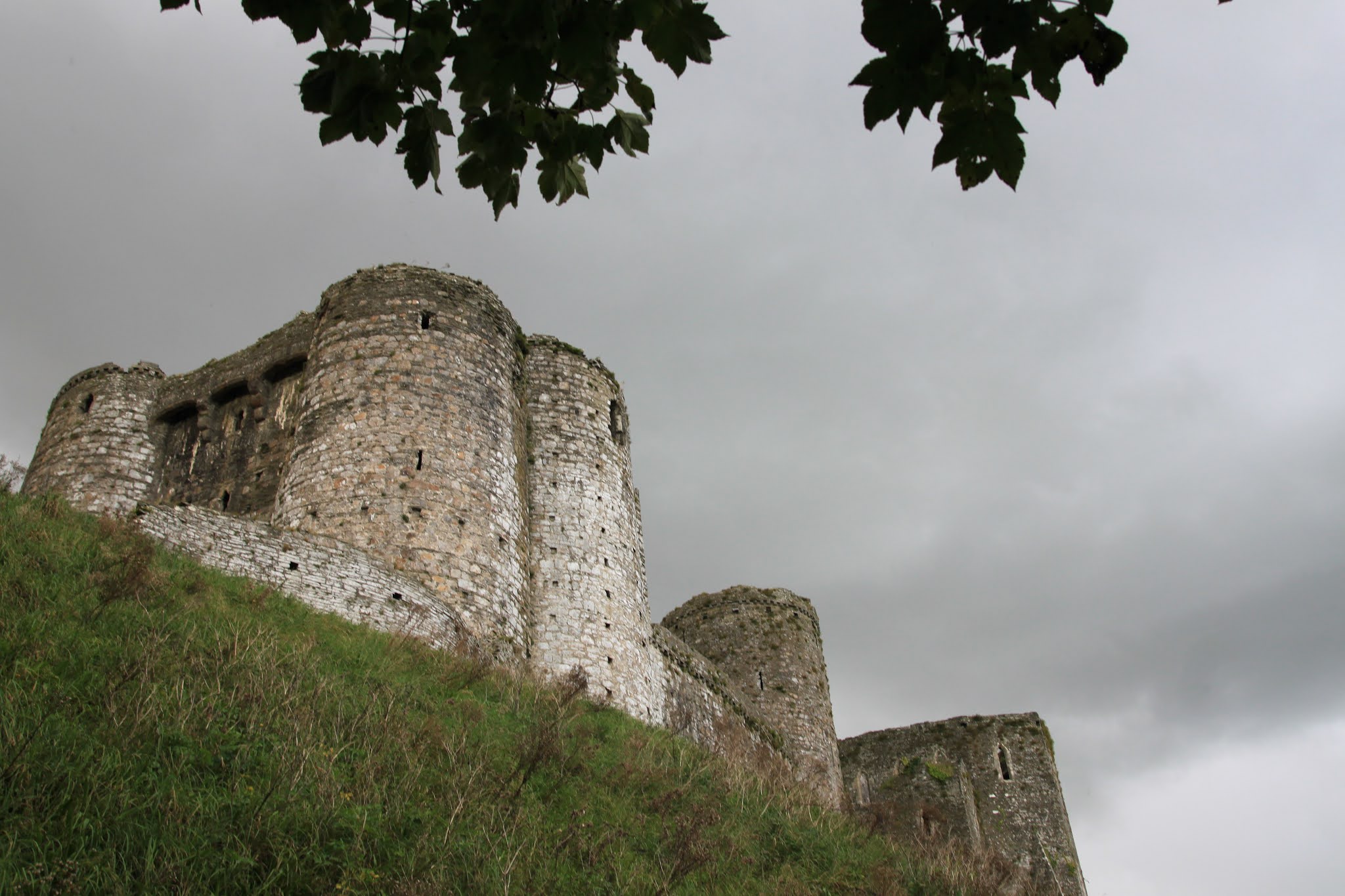
Kidwelly Castle

Ever hear the phrase, “Don’t like the weather? Wait 10 minutes. It’ll change”.


This is true of a small town named Kidwelly and especially true of its castle grounds. The fortress itself was closed to viewing but the gardens and wet lands around it were not. From the time it takes to walk around the front to the rear of the castle it went from sunny skies to dark grey clouds full of wet doom droplets.

What I learned: Nearby the castle there was a great war led by a fierce woman named Gwenllian. She was a princess by marriage and birth. He father was the Prince of Gwynedd in the 12th century. When the English King Henry I died, he had no heir.  England was left in turmoil. Wales sought their opportunity to win back their lands. Whilst her husband was away seeking more aid for the coming war, she led her doomed army against the Anglo Normans. But before losing her head, she had a son who became one of most important Welsh rulers of the times.

Also what I learned: never visit Wales without rain gear.


Saturday, 22 August 2020

Henrhyd Falls aka The Batcave

The “Henry” falls as I call them, are the tallest in south Wales with a 90 foot drop. They flow within the Brecon Beacons National Park, are free to see and contribute the “Waterfall country” of Cymru (Welsh word for Wales).
Henrhyd Falls
These waterfalls are big enough to climb behind and have a walk around in. It was here that the final scene of  The Dark Knight Rises was filmed, where it doubled as the entrance for the Batcave. (All my DC fans are drooling right now). 

Excited to see where Batman was filmed? So is everyone else. Get there early. The car park (parking lot for my Americans) is tiny and it fills up fast leaving very little parking anywhere else.

If you follow the trail below the falls it will continue on down into the forested Nant Llech valley and pass a disused watermill, the Melin Llech, with a few more smaller waterfalls along the path. The Nant Llech trail is a moderate, 3.5 mile hike which would take the usual hiker about 2 ½ hours (not counting the meandering and picture taking) to complete.

From Henrhyd Falls:

Retrace your steps back across the bridge to the path junction.

Go straight ahead, following the footpath with Nant Llech on your left-hand side.

Keep following the footpath and just after you cross a boardwalk, a smaller waterfall can be seen on your left.


Keep following the footpath until you pass through a gate which marks the end of National Trust land. Then cross a small bridge and continue to follow the path down the valley. (This is as far as I reached).

If carrying on, you reach the site of the disused watermill - the Melin Llech (these buildings are private property, NO TOUCHY). From Melin Llech, continue past the bridge on the left and follow the track uphill for about 25 yards. Join the footpath on your left and continue along this path to a kissing gate and minor road, cross the road and bear right to another kissing gate on your left.

Pass through the kissing gate then follow the path until the River Tawe comes into view. (There’s an awful lot of kissing going on if you’re on the right path). This river flows all the way to Swansea and into the Bristol Channel. You have now reached the midway point of the walk.

You can now return to the minor road by the path that you have just followed. At the road, you can either turn left uphill and follow the lanes back to the car park or, retrace the whole route back to Henrhyd Falls following the path by the Nant Llech.

Adventure awaits, where will you go?

To the Batcave!

Medieval Welsh Castle

 Once upon a time…the 11th century time…Normans invaded Wales. I think they invaded many other places but that tale for another time. During their invasion of south Wales, they built wooden “castles” which were probably more like forts. There they stood until some 200 years later when a man named Hubert came along knocking the wooden structures down replacing them with stone, erecting Skenfrith Castle.

Hubert de Burgh used the remains of the Norman castle to raise the platform in order to keep the stone castle above the flood plain as it was built right along River Monnow.  His story isn’t a happy one either. In 1201, King John gave Hubert the land to build a new shiny, stone fortress then took it away from him. Then King Henry III gave it back to him, then in 1239 he took it away from Hubert permanently. (It turns out the medieval politics are not much different than modern-day politics).

Skenfrith Castle or Ynysgynwraidd (its Welsh name), still stands today but in ruins and the only ones invading its space are the tourists. The castle’s four walls and round keep are still standing, however much of the keep has deteriorated over the years. In spite of there being no rooftop, you can still make out the three floors to the keep, now standing as a hollow tower. There are really only two ways in/out of the castle (unless you scale the castle wall-which is quite easily done; not speaking from experience…erhm..ahem)…The main entrance (where the drawbridge once lived) now has a wooden staircase up into the castle. Not really a wheelchair friendly place with its steps and uneven grounds around the courtyard. The second “entrance” leads out to the riverside. Back in the day, the river came right up to the castle wall and this was how they got their supplies inside via boat.

The castle with picnic area is very well hidden and Skenfrith will only come into view once you are pretty much upon it. If you do get lost in your search for the castle, simply follow those infamous brown signs that point to natural interest points. As a natural tourist attraction, it does not have any of the following: loos, places to eat, or shops to buy souvenirs but it’s free to see and open 24hrs. Quite literally in the midst of nowhere but a nice stopping point on your way to/from England and Wales as it’s very near the border. Also a good rest area if you are traveling to or from the Brecon Beacons back to England.

Brecon Beacon busy Bee
Busy Bee at Brecon Beacons

Viewing this castle won’t take long so if you wish to lengthen your Castle Hunting Day, try Hubert’s other nearby castles. (This guy had three)! Grosmont Castle and White Castle (not the home of cheeseburgers sadly), are all within a five mile radius of each other. Happy Hunting!


Monday, 2 April 2018

Robin Hood Adventure

"Steals from the rich and gives to the poor"

You know who I'm talking about...why Robin Hood of course! We have heard the tales of Robin of Locksley since childhood. Whether or not he was a real, actual person...well....you decide. Follow his trail through the Sherwood Forest; the place where he first met John Little (who later became known as Little John).
Robin Hood and Little John first meet (Sherwood Forest Visitor's Centre)
Trek through the forest to find the man himself! Upon wandering through some of England's oldest forests watch out for the green bandit and his merry men!


Discover Robin's village named for King Edward (Edwinstowe) a few miles from the Sherwood Forest (and about an hour drive from Nottingham). The sheriff of Nottingham had quite a way a go to chase Robin Hood around the Sherwood Forest (if the stories are true). When in Edwinstowe, hunt for the statue located secretly in the village that depicts Robin Hood proposing to Maid Marion.

Has anyone seen Friar Tuck?

Rufford Abbey is a large park which was a monastery during 12th century. Monks there prayed several times a day until the dissolution in 1536 where it was sold as large, stately country home to a richie, rich. It changed hands to another family in 1600s and more was added to the building by the Baronette Saville (which you see in the photo below).
 Saville was a Prince Charles supporter (wanted him on the throne like the many Scots) and the Bonnie Prince visited the Abbey often. Prince Charles planted the large cedar tree that still stands (to this very day) on the Abbey lawn.  After some time during the Civil War the English army had moved in and the house fell into disrepair.


Visiting the Abbey can be a haunting experience. Many have claimed to see "The Lady in White" as she floats down the path toward the pet cemetery. Others said they see a "Woman in Black" around the Abbey. Women who have stayed at the house claimed they felt a cold, clammy baby crawling up under their covers whilst they slept.

Whatever you choose to believe is entirely up to you, but this place is definitely worth the trip. It's free to visit and has a large (usually free) car park, cafe with treats to eat and even a shop for outdoor wear. It's less than 30 minutes from Edwinstowe (the village of Robin Hood) and Sherwood Forest so a great addition to The Robin Hood weekend away.

Lovely place for a stroll on a nice afternoon with loads of trails. Don't forget to check out the lake. For those more adventurous, hire a boat for a row around the waters.
"Chocolate Lake"


Tuesday, 13 February 2018

Fastnacht Day

Shrove Tuesday, Fat Tuesday, Mardi Gras, Donut Day, whatever you want to call it...

the day before Ash Wednesday is something different to everyone depending where in the world you are living but all means the same thing. Party, party! Eat, eat! Pig out before fasting for Lent. (Just so you know I'm still eating donuts after Lent).

Pennsylvania Dutch from America fry donuts and call this day, Fastnacht Day. In German meaning the Night Fast. Mmmmm...donughnuts (I miss Pennsylvania for their baked goods but now I realise why in fact it is called "Fat" Tuesday. Who cares? Bring on the Krispy Kremes and my double chin).

In southern US, places such as New Orleans ("Nar-lins" if you're pronouncing it like a local), they celebrate Mardi Gras with large, colourful parades and people dress up like brightly coloured peacocks strutting down the roads. Beaded necklaces are distributed throughout the crowds watching and participating on this Shrove Tuesday event. Yes, America likes to do things differently.

Meanwhile in Europe, they call this day Pancake Day (but then eat crepes... say whaaaa?!?!?  *scratches head*  They still need teaching in how to do big fluffy pancakes with maple syrup). Back to the crepes, ahem I mean "pancakes". English people will put just about ANYTHING on pancakes. Seriously. Nutella,  bananas, strawberries, chocolate, or sugar and lemon juice. I bet the Canadians are thinking, "You monsters! Where art thou maple syrup?!?!?"

It's at this point I would like to add that whilst we Americans call these sweet treats, dessert; the Brits call all dessert dishes, pudding. In case you weren't confused enough with their lingo. So how about it? What is your choice of fattening?


Sunday, 16 April 2017

Secrets of Cornwall


Secret lost gardens, pirate’s bay, coastal towns filled with beaches to the end of the world as we British know it; all this and more on my adventure around the Jurassic coast of Cornwall.

Mud maid
For if you have never visited the country of England you might not know that it is an island with tremendous coastlines of varying sorts but also relatively small island. Everything is ditty over here including the streets but none such as the tiny streets of Mevagissey. Traveling by car is the best way to see all Cornwall has to offer. Just be sure to listen to your navigator (ahem, Andy) or you will get lost driving about on those famous one lane roads meant for two cars to pass whilst trying not to drive off the road into the hedges. For even more fun, wait until there is a farm tractor trying to use the same country lane! 

Mevagissey is a lovely coastal beach town built on hillside with streets that are very tight (even made my very British driver squirm and HE’S USE TO TINY COUNTRY LANES)! The streets are just wide enough to fit a small car or 4-wheeler (forget vans or trucks) through. Side mirrors made be touching the buildings. Oh the fun when you meet another car trying to go the opposite direction and get by you. It’s like a game of Chicken. Who will be the first to back all the way uphill through the town to let the other pass? Good luck! O, wait! I forgot about the pedestrians wandering through the town looking in all the shop windows and those walking their dogs through town (just to make it extra challenging and get in your way).
 
Two way coastal road
For even MORE driving fun, take the coastal road (um…it’s a cow path) around to the Lost Gardens of Heligan nearby. It’ll be easier if there are two of you because one must get out to open and close the cow gate over the lane for the car to pass through (how is this even a road I think but hey ho who doesn’t like a little crazy adventure in their life right? Don’t even get me started on the cliff drop below without guard rails or even lack of pavement along this ‘road’. Andy thought Montana was bad. Ha!).

The Lost Gardens of Heligan were developed some time after the World War by soldiers who came home from the war and wanted to give back. After they died the place was forgotten about. It fell into shambles becoming overgrown locking away the secret garden over the years.

The Jungle
Garden Troll
Rope bridge
 In 1991 the Cornish stumbled upon the lost gardens and began to tidy them up developing the 200 acres into the beauty it is today for all to see. Watch out for the sleeping troll and the mud maid as you embark into the woodlands. Dare to climb across the rope bridge in the jungle known as Fern Gully. Walk amongst the sheep and see pigs and emus peppered around the fields. Finally check out the grand estate and gardens but don’t leave without seeing the Grotto, the Lost Valley and clamber around the waterfall ravine. There is much to see and do here. I would spend the day! 

Since you are already down here this far you might as well drive to the end of the earth! Or as the English like to call it, Land’s End. This is the furthest south you can get in England by car—feel free to swim the rest of the way to New York, but count me out. The sea is always too cold for me. Land’s End has been commercialized into an ‘amusement park’ but you can still enjoy the coastal walks for free. Parking is £5 unless you stop off before reaching Land’s End to park and walk there. Hungry me sniffed out a bakery onsite and just had to try a true Cornish pasty (pronounced PAW-stee not PASTE-ee). YUM! *carries on walking happily along the coast now* (what?? It’s a long drive to the edge of the world one works up an appetite). Several hours later driving up the coastline I had reached the famous Jurassic coast with its infamous Durdle Door landmark. 
Land's End
Durdle Door
Durdle Door is the Anglo Saxon term “Thirl” which means a pierced hole or opening. By visiting the structure you will understand what is meant here. Legends and stories are told of pirates using Durdle Door and its beaches to hide out and stash their treasures but the Cornish are very well known for their story telling. Free parking at Durdle Door beach as long as you parked after 7pm (which we did because…well, erhm...the driver didn’t listen to the navigator and couldn’t quite….you know what? That bit of the story is not important. What IS important is that we managed to get there at sunset and before it was dark. Barely. Ahem). The landmark can be seen from the top of the hill but for a closer, better look; climb down the steep staircase and across the pebble beach. There is no wheelchair friendly access however I was tempted to tuck and roll after seeing all the steps. But I didn’t and hence I’m still here to tell the tale.

Durdle Door at sunset

Cornwall's smallest library

Places I'd recommend to eat:
The Dolphin Inn, Grampound, Cornwall (large plates of good food and very affordable. Staff very friendly but comical too).
The Crown Inn, St Ewe. (delicious food worth the wait, good atmosphere)

Where to stay: 
Polsue Farm/ The Barns (B&B on farm with dog friends)

Friday, 17 February 2017

Chirk Castle


You had a lovely weekend in Wales but you’re headed to England now. Where to next? First stop is the local pub called The Bryntirion Inn for a pint then onto your adventure.


You don’t have to enter Snowdonia National Park to see the lovely sights nearby. Why not visit Bala Lake? This is the largest natural lake in Wales and over 3.5 miles long. It’s great for wildlife watching and the birds love it too. I just imagined the conversations between the two gulls…

“Mornin’ Harry.”
“Mornin’ Earl. How are the hatchlings?”
“Oh my misses got her feathers in a ruffle over something Junior did yesterday. Enough chat. Let’s fish!"

My other half shakes his head at my bird ‘insight’ and carries on walking around the lake taking photos. I shrug my shoulders and follow. We didn’t plan to spend much time here other than to take a few photos on this wet and windy day. However, the lake is home to fun such as water sports, fishing (like the waterfowl above) and even part of the 3 Lakes Swim Challenge, (brrrr…no thank you. I’ll be waiting in the nice warm car if you need me).
Chirk Castle
Our next stop before crossing the border to England aka The Country of Traffic Jams and Road Blocks, is Chirk castle near Shrewsbury. Our luck changed as the weather did and we enjoyed a lovely sunny afternoon in the castle gardens hunting for the famous Snowdrop flowers sprawled along the forest ground. Before leaving we had a nice cream tea in the castle courtyard whilst watching a man desperately try to capture the bouncy, black labrador who was having such fun romping about the courtyard and didn’t understand why her Human wanted her to go inside the office on a day when the sun was shining like this and she had a toy to chase!
Chirk castle wasn’t quite ready for guests so only the room available to view inside the castle was the dungeon. (Go figure!) The state rooms are still under repair as this castle is over 800 years old and needs a new face lift (wouldn’t you at that age!?!)
 Adam’s tower and the dungeon were great fun! Loads of interactive things to do. You can dress for battle or like royalty AND if you’re really adventurous, you can take the dim-lit, windy, stone staircase down into the dungeon and see what it was like to be a captive of the evil Roger Mortimer. Who it is said was responsible for the killing of the Welsh princes that once lived in that castle. Nice story, eh? What’s a castle visit without a grim tale? Now that is MY kinda Valentine’s Day. Hope you enjoyed yours!